Get USD stability.
Stay in self-custodied Bitcoin.
Hold dollars. Hold bitcoin. No banks, no tokens, no third parties.

USD Stability
Your dollar balance stays constant, even as Bitcoin moves.

Self-Custodial
Your keys never leave your device.

Two-Sided Trading
Slide between USD stability and BTC exposure instantly.

100% Bitcoin-Native
Peer-to-peer trades using Lightning channels.
Keep a fixed dollar value in your Lightning wallet.
Your counterparty takes the other side — gaining leveraged Bitcoin exposure.
Price goes up? You pay them. Price goes down? They pay you.
Everything settles instantly over Lightning.
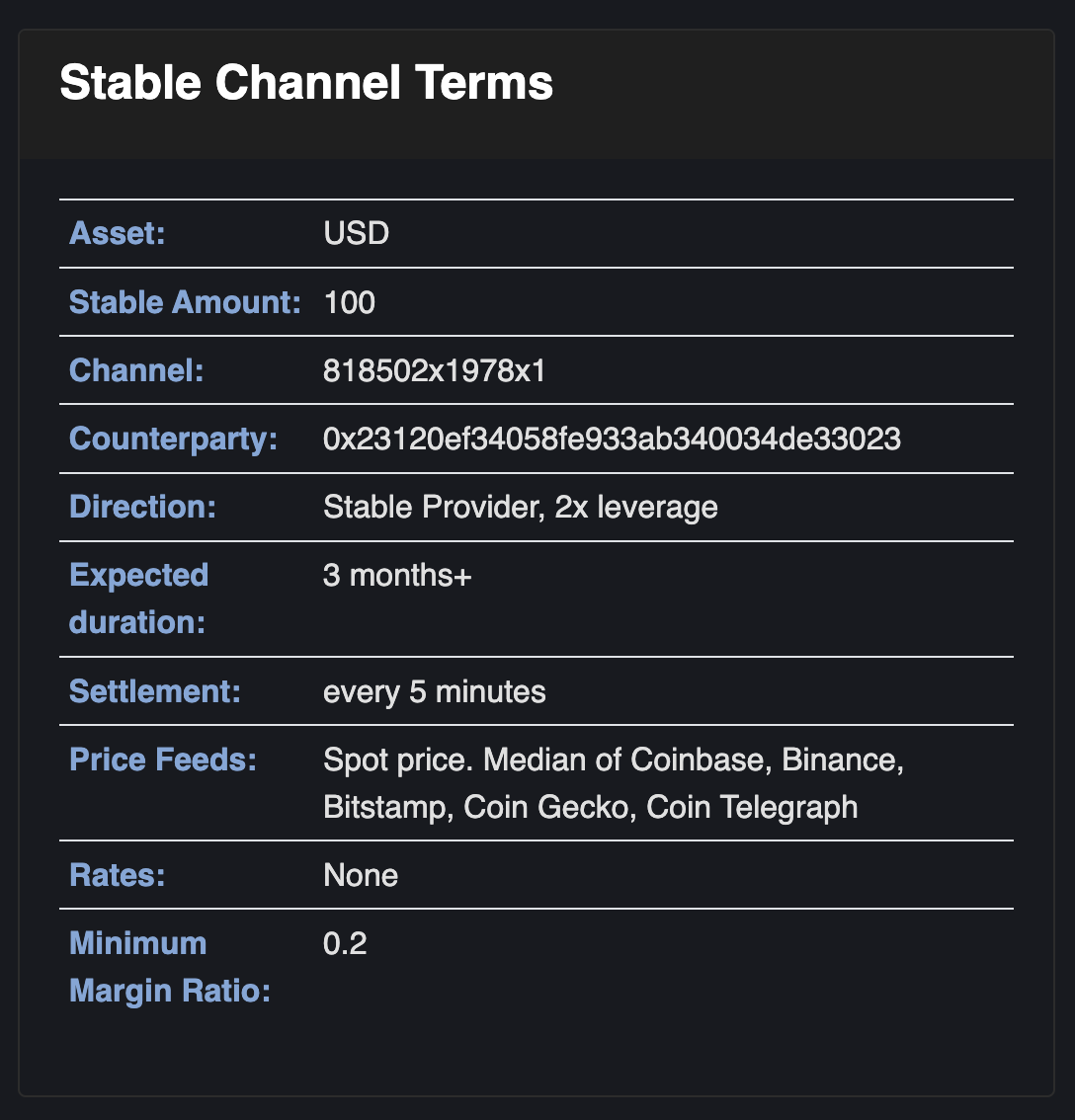
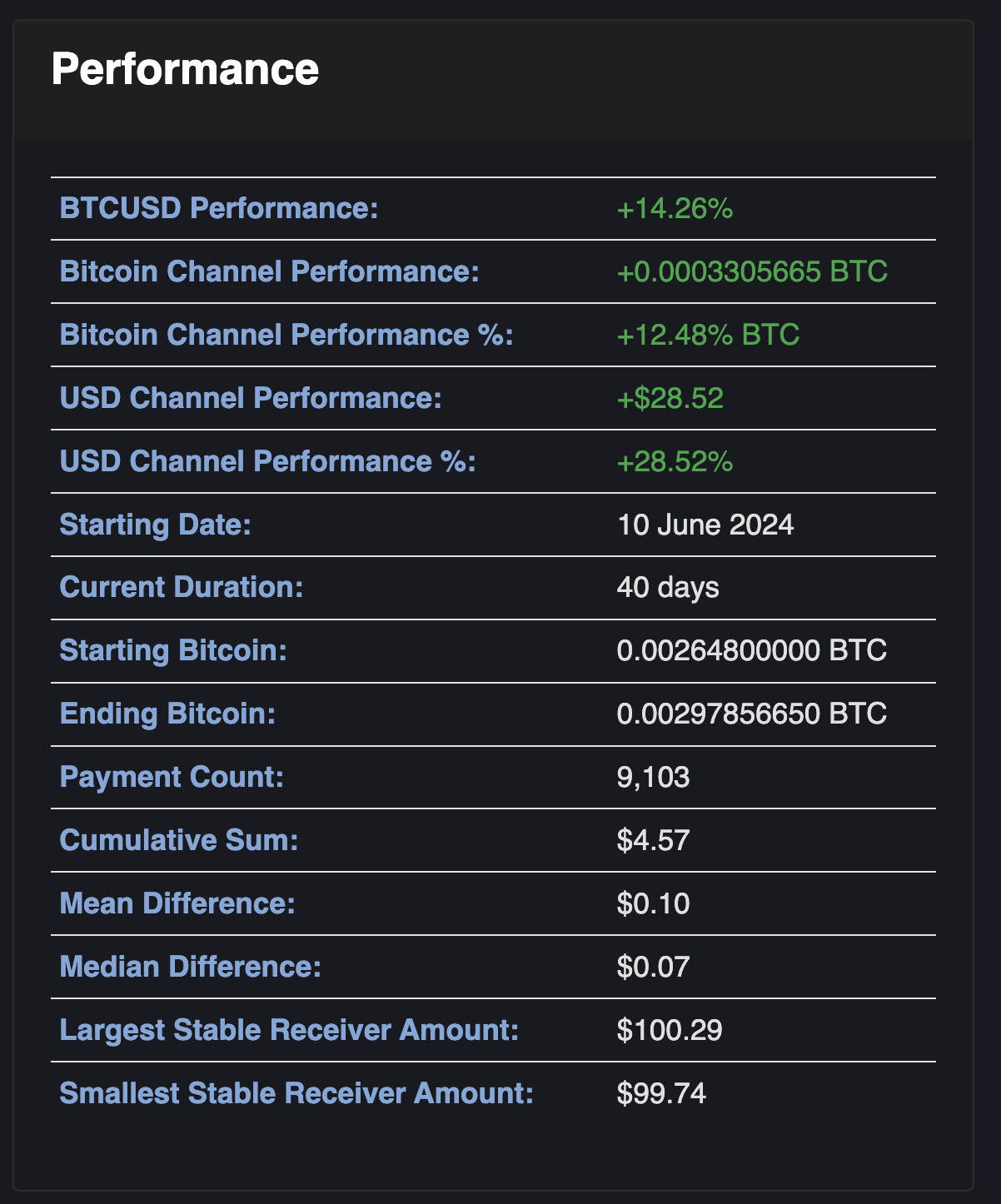
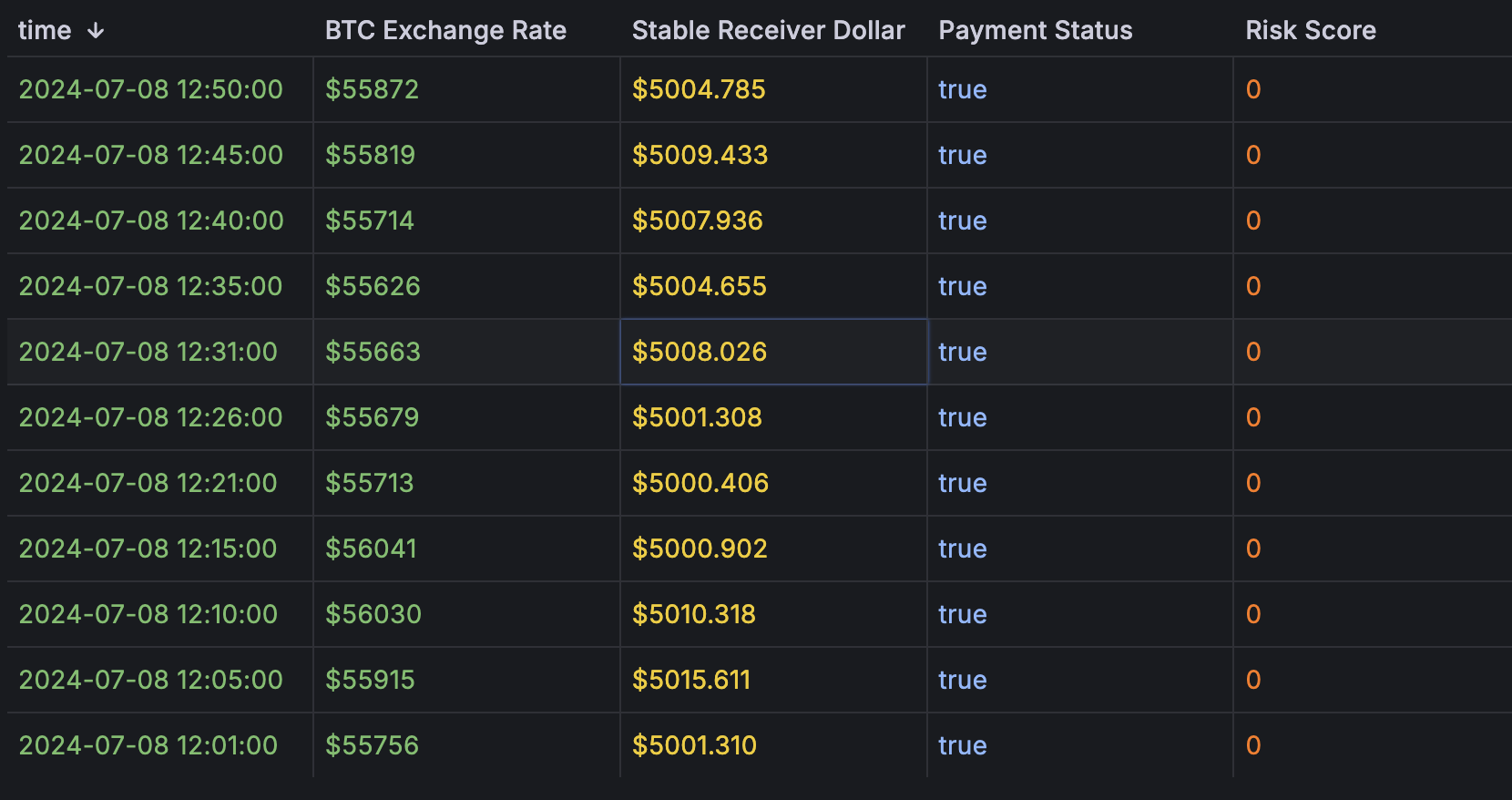
Continuous Settlement
Positions rebalance automatically every few minutes. No manual trading required.
Close Anytime
All agreements are at-will. Either party can close their position and withdraw funds at any time. Continuous settlement minimizes counterparty risk.
Built for Privacy and Resilience
Stable Channels is a Bitcoin-native, self-custodial solution. No tokens, no banks, no third-party risk.
Why this matters.
Stablecoins require trust in banks and token issuers. Stable Channels doesn't. It uses Bitcoin in Lightning channels to create dollar stability — no tokens, no custodians, no points of failure.
Stable Channels reimagines dollar stability using Bitcoin's Lightning Network — instant settlement, peer-to-peer, no intermediaries.
Up and running in minutes
2
Fund
Send Bitcoin to your wallet. On-chain funds can be swapped into a Lightning channel for trading.
3
Trade
Slide the balance bar to trade between USD stability and BTC exposure. Settlements happen instantly over Lightning.
Links and Resources
Resources, demos, and technical deep dives to learn more about Stable Channels.
Technical Deep Dive
Delving Bitcoin PostAn in-depth post on Delving Bitcoin discussing the technical and financial aspects of Stable Channels.
Podcast Interview
Stephan Livera Podcast"Even as bitcoiners, we can't deny that there is demand for 'stablecoins' or some kind of stable value feature. Tony Klausing, bitcoin and lightning developer joins me to talk about Stable Channels."
Twitter Thread
Explaining the Basics of Stable ChannelsA Twitter thread by @tonklaus explaining the fundamentals of Stable Channels.
Demo Video
eCash + Stable Channels IntegrationWatch a demo video showcasing the integration of eCash with Stable Channels.
Front-End Use-Cases
2-Minute Demo VideoA short video demonstrating some front-end use-cases for Stable Channels.
Conference Presentation
Bitcoin Atlantis Conference 2023A presentation from the Bitcoin Atlantis conference discussing Stable Channels.
GitHub Repository
Stable Channels GitHubAccess the GitHub repository for Stable Channels to view the source code and contribute.
Telegram Group
Join the Stable Channels TelegramJoin the Telegram group to discuss and stay updated on Stable Channels.
Frequently Asked Questions
Common questions about Stable Channels.
What are Stable Channels?
Stable Channels is an open-source project that brings Bitcoin-backed dollar balances to the Lightning Network, matching users who want USD stability with users who want leveraged BTC exposure.
How does Stable Channels work?
Stable Channels pairs users who want dollar stability with users who want more Bitcoin exposure in a Lightning channel. The system settles frequently based on the BTC/USD price — if the price goes up, the stable side pays the leveraged side, and vice versa. This maintains a constant dollar value on one side.
What problem does it solve?
Bitcoin price volatility. Stable Channels provides a decentralized, self-custodial alternative to custodial stablecoins — no banks, no token issuers, no asset freezes.
What are the key components of Stable Channels?
Stable Channels involves two types of users: Stable Receivers, who want less BTC price exposure, and Stable Providers, who want more BTC price exposure.
Is Stable Channels a stablecoin?
No. Stable Channels does not issue any tokens. It uses native Bitcoin in Lightning channels to create synthetic dollar exposure. There are no new assets — only Bitcoin.
How often does the system settle?
Every few minutes. The system queries five independent price feeds and uses the median price to ensure accuracy.
What happens if the BTC price goes down?
The Stable Provider compensates the Stable Receiver. If the price drops significantly (more than 50%), additional collateral may be needed via a splice-in to maintain the agreement.
What are the risks of using Stable Channels?
Risks include extreme Bitcoin price volatility, node outages, and the possibility of non-cooperative channel partners. Proper risk management, using reputable channel partners, and frequent settlement can help mitigate these risks.
What happens if the price of Bitcoin drops significantly?
If the BTC price drops more than 50%, the channel may not have enough capacity to maintain stability. Cooperative actors may need to splice in additional funds to continue the agreement, or swap to stablecoins.
Where can I find more information about Stable Channels?
You can find more information on the Stable Channels GitHub and join the discussion on the Stable Channels Telegram.
Ready to try it?
Download the app and start trading in minutes.